These Are the World’s Best Plant-Based Dairy Products, According to 2,000+ Non-Vegans
Anay Mridul | Green Queen Media | 18 March 2026
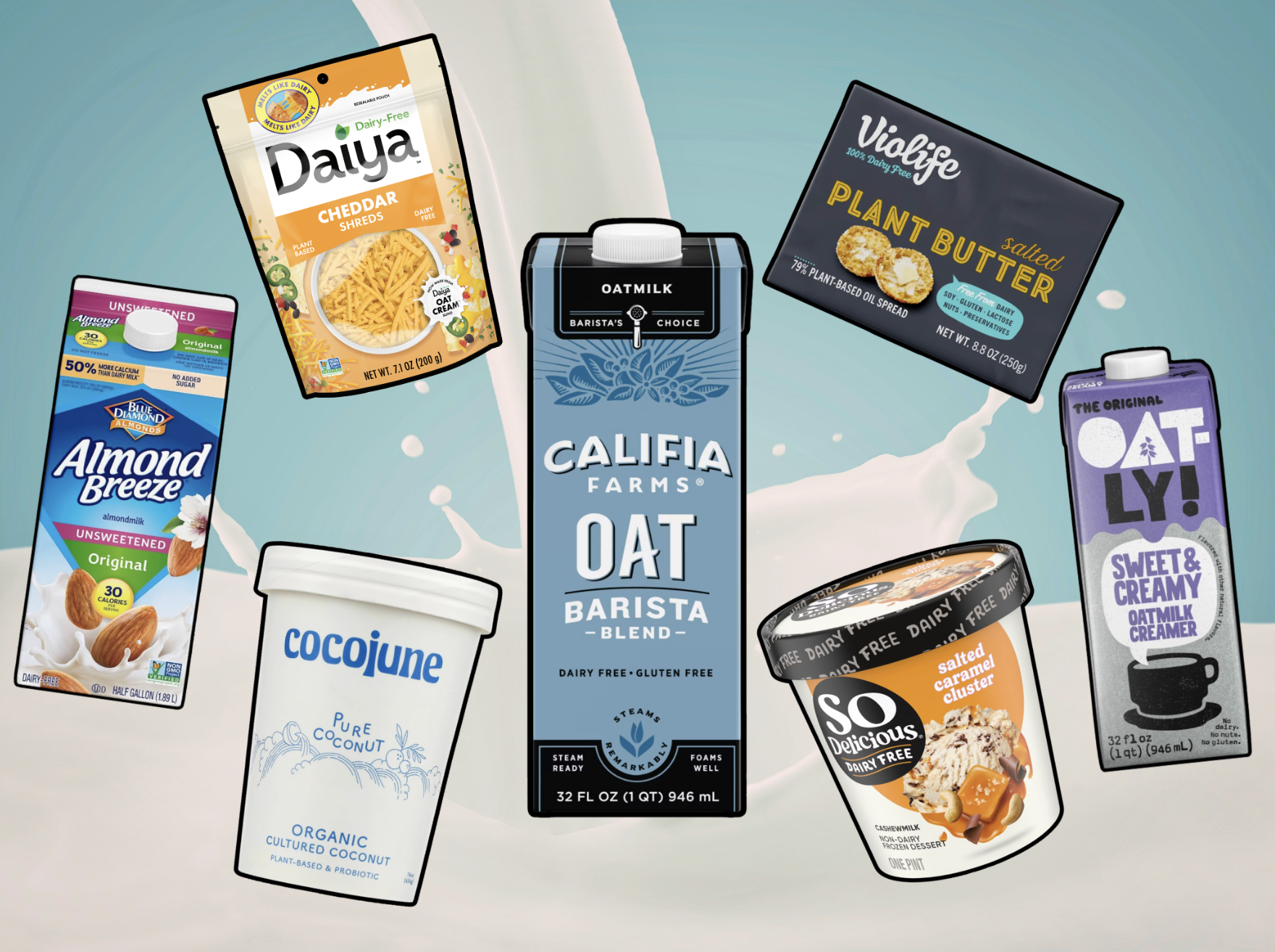
Plant-based barista milks and coffee creamers have closed the flavour gap with dairy, though the average non-dairy product still has some way to go. Price and protein wins, meanwhile, will be key to the category’s future.
In the US, 83% of plant-based milk drinkers switched back to dairy in 2025, according to market research agency SPINS. Nothing is a bigger driver of this shift than how these products taste.
Last year, a global survey revealed that 57% of consumers are resistant to non-dairy milk because they’re unsatisfied with its taste or texture. And among the 38% of people who don’t buy these products, 58% showcase the potential to switch if certain needs are met – better flavour being top of the list.
It outlines the need for continued innovation in the dairy-free category, which remains the most well-established segment in the plant-based food market. This momentum is therefore being spearheaded by companies that lead the sensory charts.
The best-tasting products raise the bar for the rest of the sector, and open the door for many consumers who otherwise remain sceptical of dairy alternatives.
To find out which innovations are closest to their cow-based counterparts, non-profit Food System Innovations’s sensory insights initiative, Nectar, conducted an extensive blind taste test of plant-based dairy products between September and November 2025.
Nectar evaluated 98 dairy-free products across 10 categories, pitting them against their dairy equivalents in applications that mirror real-world consumption. Each product was tasted by at least 100 consumers, with a total of 2,183 non-vegans participating in restaurants in New York City and San Francisco.
The findings are highlighted in Nectar’s third Taste of the Industry report, and its first dedicated to plant-based dairy. A total of 27 products were rated as good or better than their dairy counterparts by at least 50% of consumers, and the brands behind them are being recognised with a Tasty Award at a ceremony in San Francisco today.
Coffee creamers the most promising dairy-free category
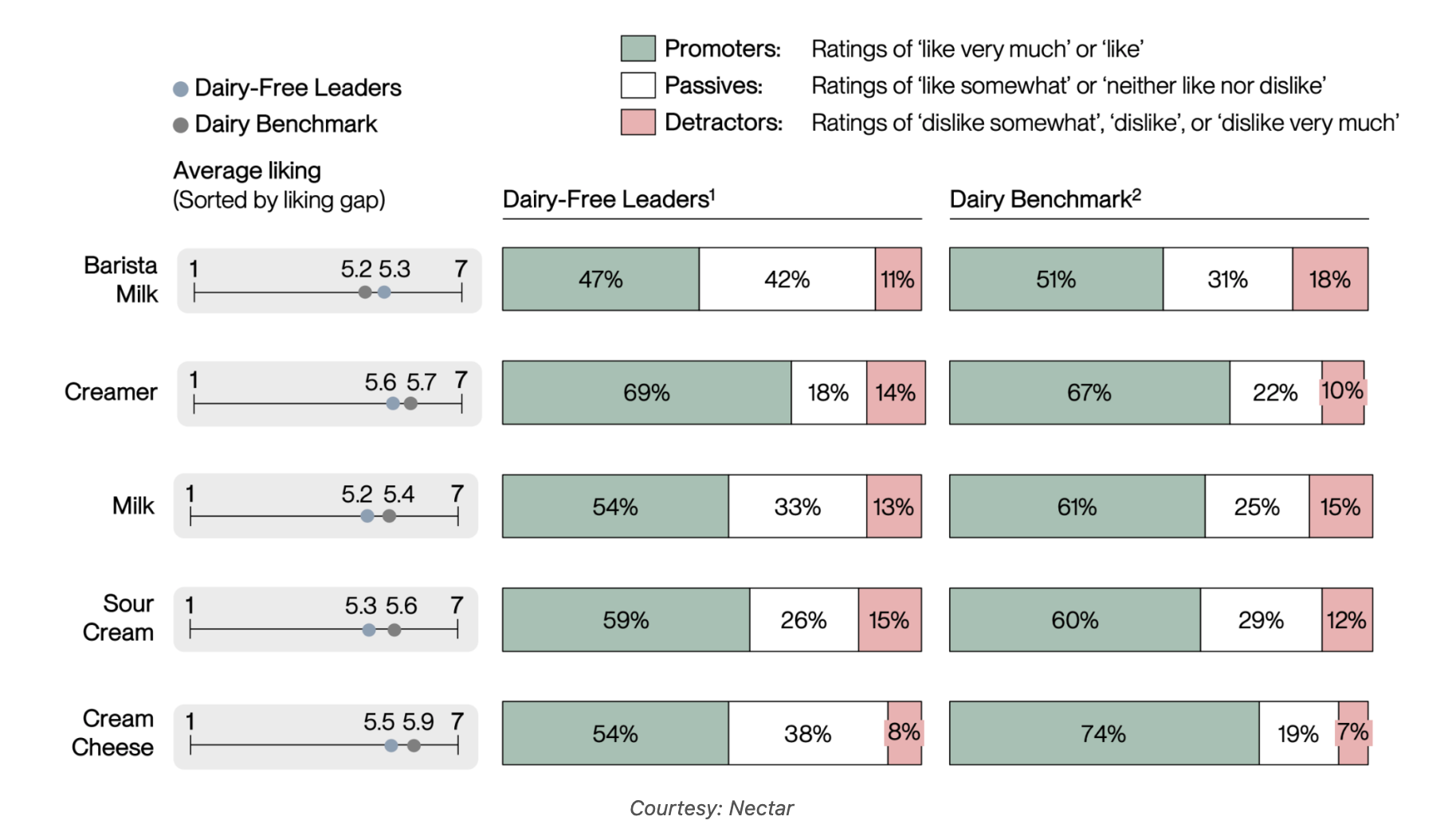
The taste test reveals that some non-dairy products (like barista milks and coffee creamers) are far ahead on the taste parity pathway than others (such as mozzarella and yoghurt).
For instance, 69% of Americans ‘like’ or ‘like very much’ the leading dairy-free creamer products, two percentage points higher than those who say the same for the benchmark dairy product, Chobani’s sweet cream creamer.
Oatly, Planet Oat, Silk, Sown, and Violife all passed the 50% threshold for the Tasty Award, as did Nestlé’s Coffee Mate (which contains less than 2% dairy derivatives and was excluded from the category averages in the report).
In fact, Oatly’s sweet and creamy creamer came within 0.1 points of liking with Chobani’s dairy version. This indicates that it has a 10-50% likelihood of outperforming the dairy benchmark in future taste tests.
“Creamers are heavily engineered products on both sides. Dairy creamers are often sweetened, flavoured, and stabilised, not simply cream,” says Nectar director Caroline Cotto.
“That levels the playing field considerably: oat-based creamers, in particular, excel at delivering the sweetness and smooth mouthfeel consumers want in coffee, and they’re competing against a formulated product rather than pure dairy richness,” she explains.
Cotto believes creamers are the most likely segment to overtake dairy on flavour preferences this year. “Dairy-free creamers as a category matched or exceeded dairy on purchase intent (5.6 vs. 5.5), which tells you the consumer experience is already there for the best products,” she says.