What a massive blind taste test of vegan milk, cheese, and ice cream found — explained in one chart
Kenny Torrella | Vox (Syndicated to Yahoo) | 18 March 2026
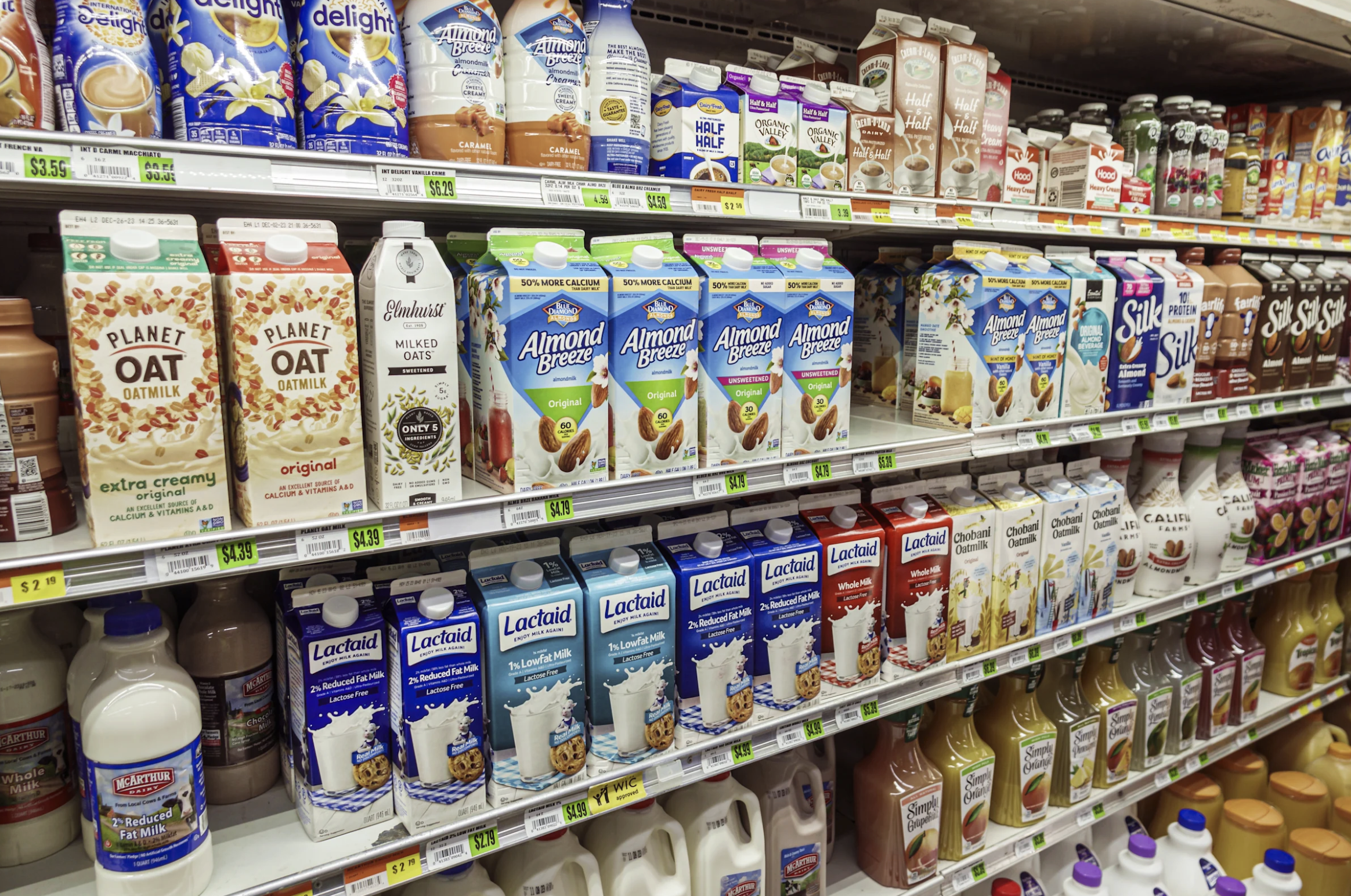
Over the last two decades, the availability of plant-based foods has exploded.
You can get a meat-free patty in your Burger King Whopper if that’s your thing, buy realistic “chicken” nuggets at your local grocery store, or order marbled plant-based steak from food startups. But one animal-free food category has truly escaped containment from the vegan menu: plant-based milk.
Key takeaways
Dairy production is a large driver of climate change, and dairy-free alternatives, like oat milk and cashew-based ice cream, haven’t gained enough market share to significantly displace it.
To see how the dairy-free sector can improve, a nonprofit conducted the largest ever blind taste test, pitting plant-based versions of milk, cheese, yogurt, and more against conventional dairy.
The experiment found that, on average, consumers enjoy conventional dairy more than dairy-free products. However, some of the top-performing dairy-free versions came close, demonstrating there’s potential for the plant-based market to further grow.
Milk made from soybeans, oats, almonds — even corn, bananas, peas, or potatoes — or any other plant-based source now accounts for around 15 percent of fluid milk sales in the US. For comparison, sales of plant-based meat make up around just 1 percent of the American meat market.
A new, massive blind taste test might help explain plant-based milk’s notable rise: A lot of people just think it tastes good — in some cases, almost as good, or just as good, as cow’s milk. (Read on to see which products rose to the top.) Other dairy-free products, like plant-based mozzarella and yogurt? A lot less so, the experiment found. The same goes for most plant-based meats, according to a similar blind taste test I wrote about when it was released last year.
Knowing which of these products people like — and dislike — and more importantly, how to make them better, is important, because dairy has a significant environmental footprint. Global dairy production spews about the same amount of climate-warming emissions into the atmosphere as global air travel, and cows’ waste is a major source of water pollution. In dairy farming, cows are also subjected to a number of cruel practices, and the industry comes with threats to human workers, as well. A more sustainable and humane future, then, depends on making all dairy alternatives go mainstream, not just your favorite cow-free milk.
Results of the big dairy-free blind taste test, explained
Late last year, a nonprofit called NECTAR — which researches alternative proteins like plant-based meat and dairy — recruited 2,183 people in San Francisco and New York City to participate in the largest ever blind taste test of dairy-free foods. Six percent of participants were vegetarian, 3 percent were pescatarian, and the rest considered themselves either “flexitarians” or omnivores.
One of the many dishes of yogurt, topped with granola, served to taste testers. | NECTAR/Palate Insights
Without knowing which version of a product they were tasting, participants tried a number of some of the top-selling 98 plant-based dairy products across 10 categories tested in the experiment, which included ice cream, barista-style milk, yogurt, cream cheese, and regular drinking milk — alongside one animal-based “benchmark” per category for comparison. Each item was prepared as it would be in a real-world setting: cream cheese was smeared on bagels, mozzarella was served on pizzas, creamers were used in coffee, and so on.
Participants then rated each product on a seven-point scale — from “dislike very much” to “like very much” — and provided feedback on flavor, texture, and appearance.
It might not come as a huge surprise to hear that most participants tended to like conventional dairy products more than plant-based versions. Taking the combined ratings of all products tested, on average, 65 percent of participant ratings on conventional dairy products were “like very much” or “like,” while only 35 percent of ratings of the plant-based dairy products reached those levels.
The results also highlighted a wide gap in quality among plant-based products. The top dairy-free creamer, sour cream, barista milk, and regular plant-based milk rated at similar levels as the dairy versions. But the averages tended to lag far behind.
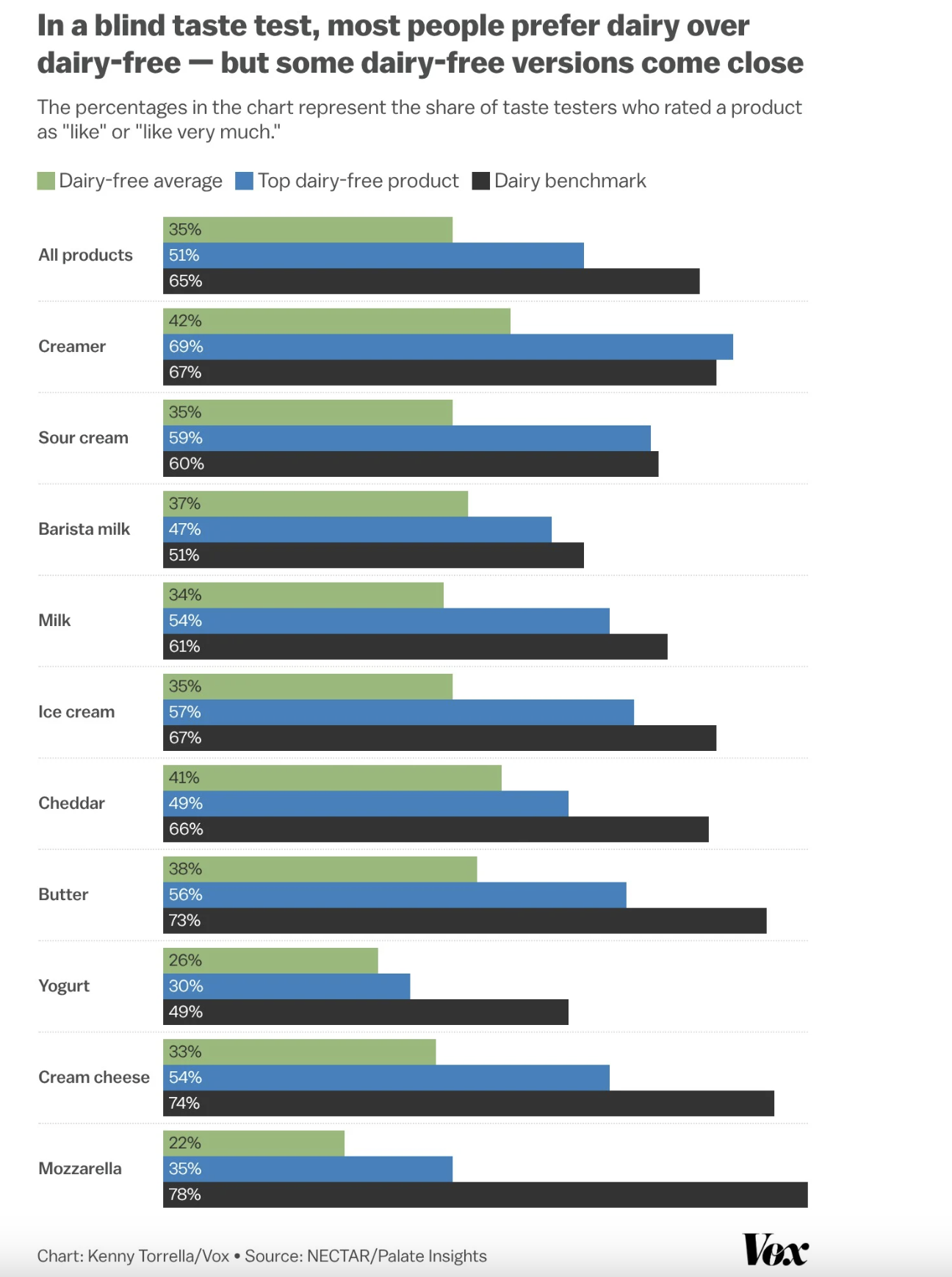
A chart that displays what percent taste testers rated products as “very much like” or “like.” Scores are listed per category, such as creamer, sour cream, milk, and ice cream, and by type of product (dairy-free average scores combined, top-performing dairy-free product, and the conventional dairy benchmark).
This finding confirms something I’ve previously written about: There are some very tasty plant-based meat and milk products out there — and a whole lot of not-so-tasty ones. And the latter reality might cause some people to write off whole categories of meat and dairy alternatives after buying and disliking one or two disappointing products.
In a head-to-head comparison, only one plant-based product out of the 98 tested achieved “taste parity” with its dairy counterpart: Califia Farms’ Oat Barista Blend, which is primarily used in coffee drinks and is meant to replicate something like whole milk. It was tested in lattes against whole cow’s milk from Horizon Organic. Participants were split, with 35 percent preferring the oat milk, 35 percent preferring the cow’s milk, and 30 percent having no preference between the two.